The short answer
Call a new remodeling lead within minutes, while the homeowner is still holding their phone and still thinking about their bathroom. If they don’t answer, text right away, then keep a short cadence of calls and texts over the next few days. The goal of the first call isn’t to sell. It’s to confirm the project, qualify, and book a demo.
What is speed to lead, and why does it matter for remodelers?
Speed to lead is the time between a homeowner submitting your form and someone from your company reaching them. For a remodeler, it’s often the difference between a booked demo and a lead that “never answered.”
Think about what the homeowner was doing when they filled in the form:
- They were looking at your ad, maybe a video of a finished walk-in shower.
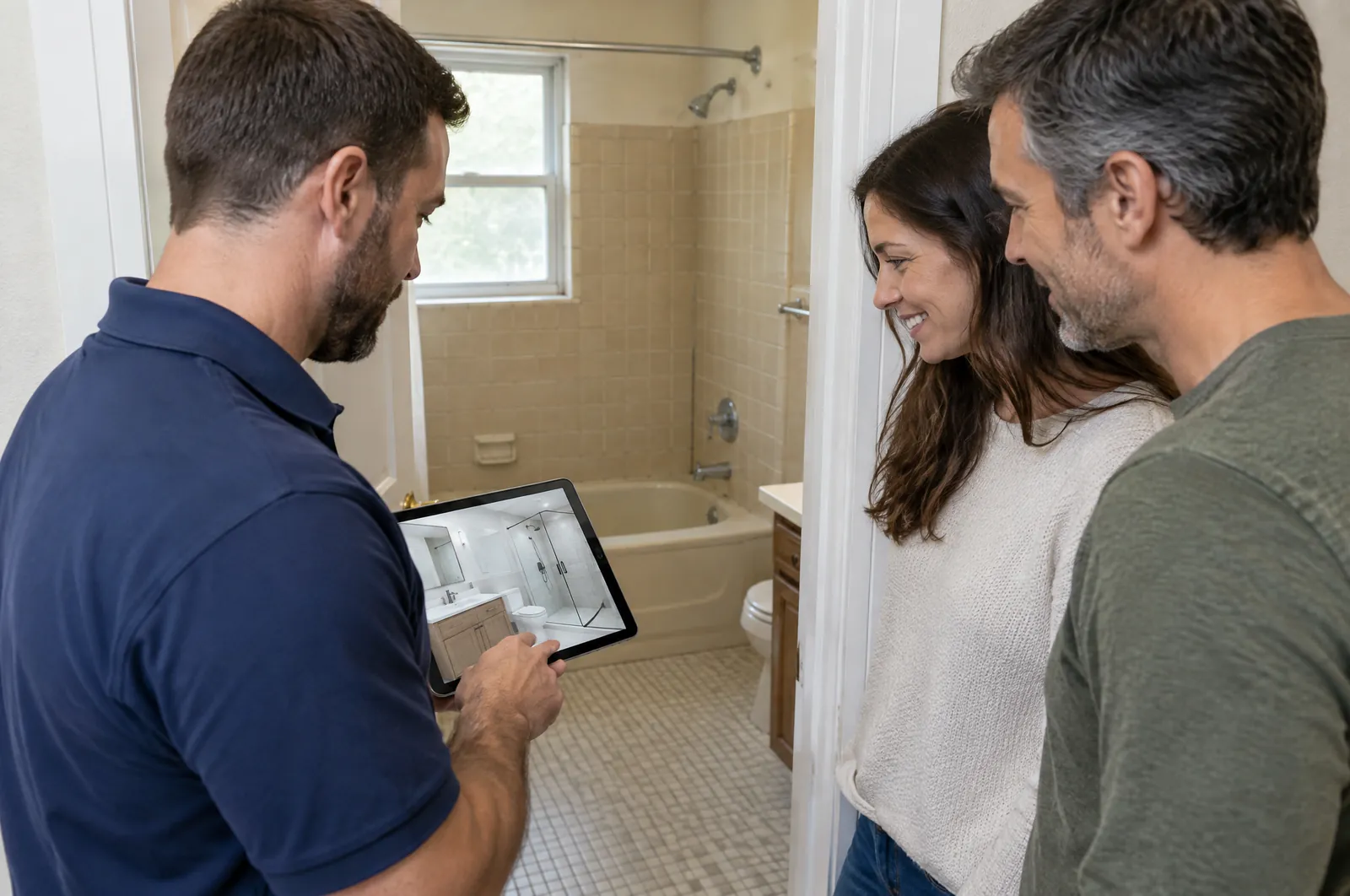
- They were picturing their own bathroom, and the beige tile they’re tired of.
- They had a few spare minutes and their phone in their hand.
An hour later, all three have changed. They’re driving, cooking, at work, or scrolling something else. If they also asked another contractor, that contractor may have already called. Nothing about the project changed. The moment did.
That’s why we treat follow-up as part of lead generation, not something that happens after it. In how to get more bathroom remodeling leads, calling every lead within minutes is one of the five steps that matter most.
How fast should you call a remodeling lead?
As fast as you can reliably manage, and measured in minutes, not hours. The best time to reach a homeowner is while they’re still on the page they just submitted.
We won’t give you a magic number, because the honest answer depends on your setup. What we can say is this: every step that slows the first call down, like a lead sitting in an inbox, a rep finishing a demo before checking messages, or a lead that arrives at 8 p.m. and waits until morning, costs you conversations.
The fix is structural: route new leads straight to a person whose job is to call them, alert that person instantly, and cover the hours they’re not working with an automated first touch.
What should the follow-up cadence look like?
Most leads won’t pick up on the first call, so plan a short sequence of calls and texts rather than a single attempt. Here’s a cadence that works as a starting point for bathroom remodeling leads:
| When | Touch | Goal |
|---|---|---|
| Within minutes | Call | Catch them while they’re still on their phone |
| Right after a missed call | Text | Let them know who called and why, and offer to book by text |
| Later the same day | Call | Try a different time of day |
| Day 2 | Call, then text | Reference the project they asked about |
| Day 3–4 | Call | Evenings often reach working homeowners |
| Day 5–7 | Text | A simple “still planning your bathroom?” check-in |
| After that | Nurture | Move them to re-engagement, not the trash |
Adjust the timing to your market and your team, then keep it the same for every lead so you can measure it. Leads that go quiet aren’t dead. Old and cold leads can be worked again later, which we cover in AI follow-up for remodeling leads.
Automated calls and texts come with consent requirements. Make sure your lead form’s consent language covers how you’ll contact people, and check the details with your attorney.
What should you say on the first call?
Keep the first call short and specific. You’re confirming the project, qualifying, and booking, not selling the remodel over the phone. A simple structure:
- Who you are and why you’re calling. “Hi, this is Sam with [Company]. You just asked about a walk-in shower, so I wanted to catch you while it’s fresh.”
- Confirm the project. “Is this for your primary bathroom? What’s bugging you most about it right now?”
- Qualify. Confirm they own the home, the address is in your area, the budget range from the form, and when they want it done.
- Book. “Our designer can come out Tuesday at 10:30 or Thursday at 4. Will everyone who’s part of the decision be there?”
- Confirm. “I’ll text you the details now, with your designer’s name.”
The form already asked about ownership, budget and timeline, so the call is a confirmation, not an interrogation. If you haven’t built those questions into your form yet, start with lead form qualifying questions for bathroom remodelers.
Who should make the first call?
Someone whose only job at that moment is calling leads. Not a sales rep between demos, not the owner between job sites, and not whoever happens to see the notification.
Your realistic options:
- An in-house setter who gets an instant alert for every new lead.
- An outsourced setting team that covers wider hours than one person can.
- An AI agent that sends the first text or makes the first call instantly, then hands the conversation to a person.
Most companies use a combination, with automation covering after-hours and weekends. We compare the people side in appointment setting for remodelers: in-house vs. outsourcing.
What slows down the first call?
Usually it isn’t laziness. It’s the path a lead takes before it reaches a person. Every handoff between the form and the phone adds minutes, and some add hours.
The most common bottlenecks we see in remodeling companies:
- Leads land in an inbox. A form notification in a shared email account waits until someone checks it.
- Leads land in Facebook. Lead form submissions sit inside Meta until someone downloads them, instead of flowing straight into your CRM.
- The caller is also the closer. A rep in the middle of a two-hour demo can’t take a new lead, so it waits.
- Nobody covers evenings and weekends. Homeowners browse after dinner and on Saturday morning, exactly when the office is closed.
- No one owns it. When everyone is responsible for calling new leads, no one is.
Fix the path first. Connect the lead form directly to your CRM, send an instant alert to the person who calls, and set up an automatic first text so every lead hears from you right away, even at 9 p.m. Then assign one owner for response time and review it weekly.
None of this needs a bigger team. It needs fewer steps between the homeowner pressing “submit” and your phone ringing.
How do you measure speed to lead?
Log the time each lead arrives and the time of the first real contact attempt, then look at the gap across all your leads, not just the good days.
Track these alongside it:
- Contact rate: the share of leads you actually spoke to.
- Booked rate: the share that became a booked demo.
- Show rate: the share of booked demos that happened.
If your response time is slow at certain hours, you’ll usually see it in the booked rate for leads that arrived then. That tells you exactly where to add coverage. It’s also worth watching after a booking: how to cut no-shows on remodeling appointments picks up where this post ends.
Make speed a system, not a habit
Speed to lead only holds up when it doesn’t depend on someone remembering. New leads should trigger an alert, a first touch and a follow-up sequence automatically, and every outcome should be logged.
That’s how YardScale runs it for bathroom remodelers: leads from your ads land in our CRM, fast follow-up goes out automatically, our setters call and qualify, and every lead and booking posts live in your Slack channel. You can see how the whole flow works on our homepage.
Key takeaways
- Call new remodeling leads within minutes, while they’re still thinking about the project.
- Text immediately after a missed call, then follow a short, fixed cadence of calls and texts.
- Keep the first call to confirm, qualify, book and confirm again; don’t sell over the phone.
- Give the first call to someone whose job is calling leads, and automate after-hours coverage.
- Measure the gap between lead arrival and first contact, and watch booked rate by hour.